
If you have been trying to figure out how to get your photography website to show up on Google, there is one strategy that works better than almost anything else for wedding photographers: blogging your actual weddings with intention.
Not just uploading pretty photos and calling it done. Actually writing posts that are built to be found by people searching for photographers at specific venues.
This is called venue-based SEO, and it is one of the most powerful things you can do for your business. When someone types “photographer at [venue name]” into Google, you want your blog post to be the first thing they see. Here is exactly how to make that happen.
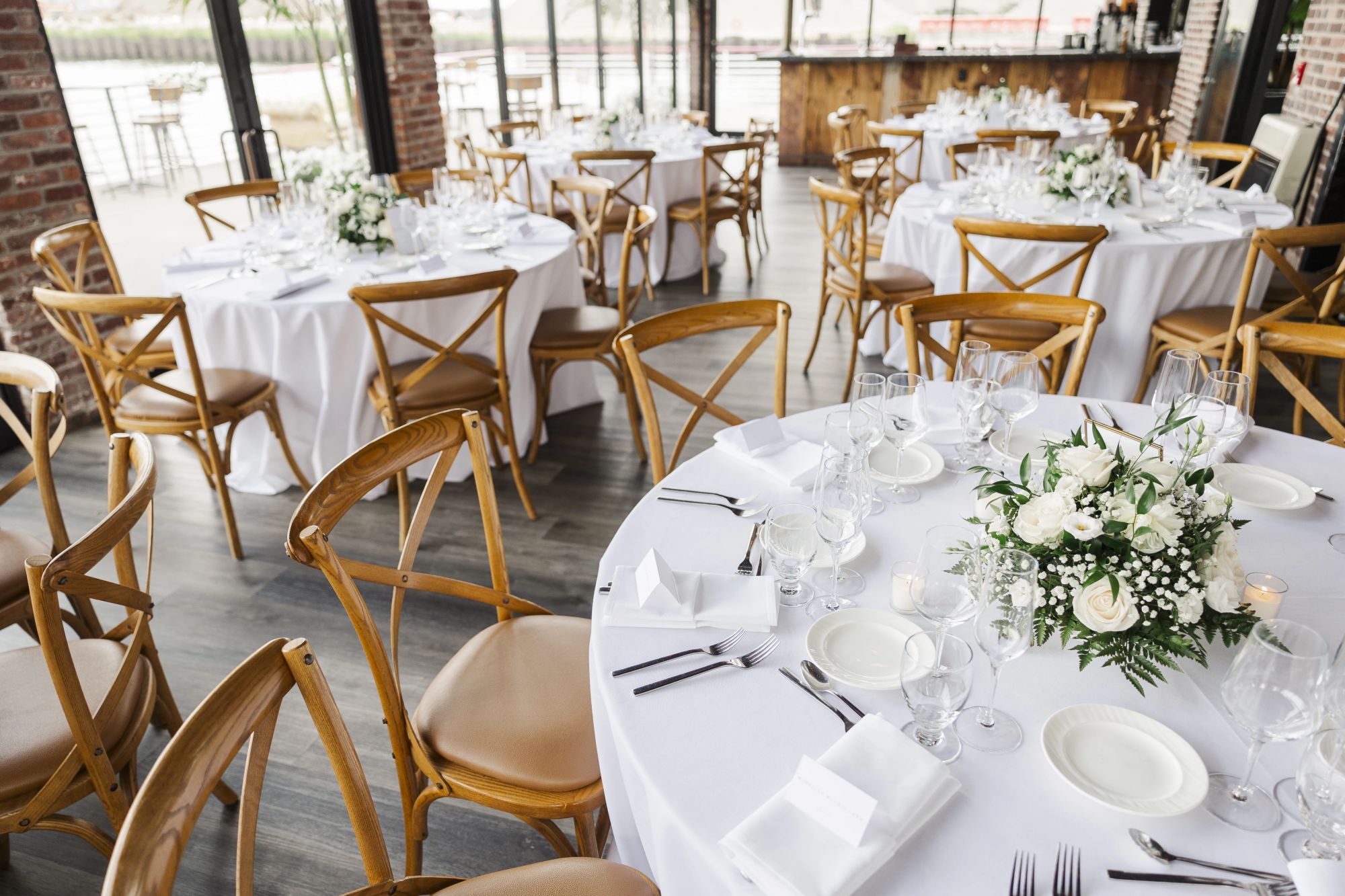
Why Venue Keywords Are So Valuable
Think about how your ideal client searches when they are ready to book a photographer. They probably are not starting with “wedding photographer.” That phrase is wildly competitive and extremely broad. They are searching for something much more specific, something like “Terrain at Styer’s wedding photographer” or “Willowdale Estate wedding photos.”
Those searches are coming from people who have already chosen their venue. They are not browsing. They are close to booking. And if your blog post shows up when they search that venue name, you are already ahead of every other photographer who does not have content targeting that keyword.
Venue-based searches also tend to have lower competition than broad city keywords. Ranking for “Philadelphia wedding photographer” is a long game that takes years. Ranking for a specific venue? You could see results in a matter of months, sometimes even weeks, depending on how established your site already is.
The Real Opportunity Most Photographers Miss
Most photographers upload their wedding galleries to a portfolio page, maybe share a few images on Instagram, and move on. The photos exist, but they are not doing any SEO work for you.
A blog post is different. A blog post gives Google something to read, index, and serve to people asking questions. Photos alone do not rank. Words do. And when your words include the venue name, the location, details about the day, and the kinds of searches your future clients are already making, your post becomes a piece of content that actively works to bring in inquiries long after the wedding is over.
How to Structure a Real Wedding Blog Post for SEO
This is where the strategy comes in. A blog post that ranks is not just a photo dump with a couple of captions. It is structured intentionally from the very first line.
Start with a Keyword-Rich Title and Introduction
Your blog post title should include the venue name and ideally a location. Something like:
“A Garden Wedding at Stonover Farm: Lenox, Massachusetts”
Or if you want to lead with a story angle:
“Rainy Day Magic at the Barn at Liberty Farms (And Why It Was Perfect)”
Either way, the venue name needs to be in the title. That is the keyword you are targeting, and Google gives a lot of weight to what appears in the title tag of your post.
Your first paragraph should naturally include the venue name again, along with the location. Do not stuff it awkwardly, just write the way you would tell someone about the wedding. “Emily and Jake got married at Stonover Farm in the Berkshires on a perfect September afternoon.” That one sentence has the venue name and the location, and it reads completely naturally.
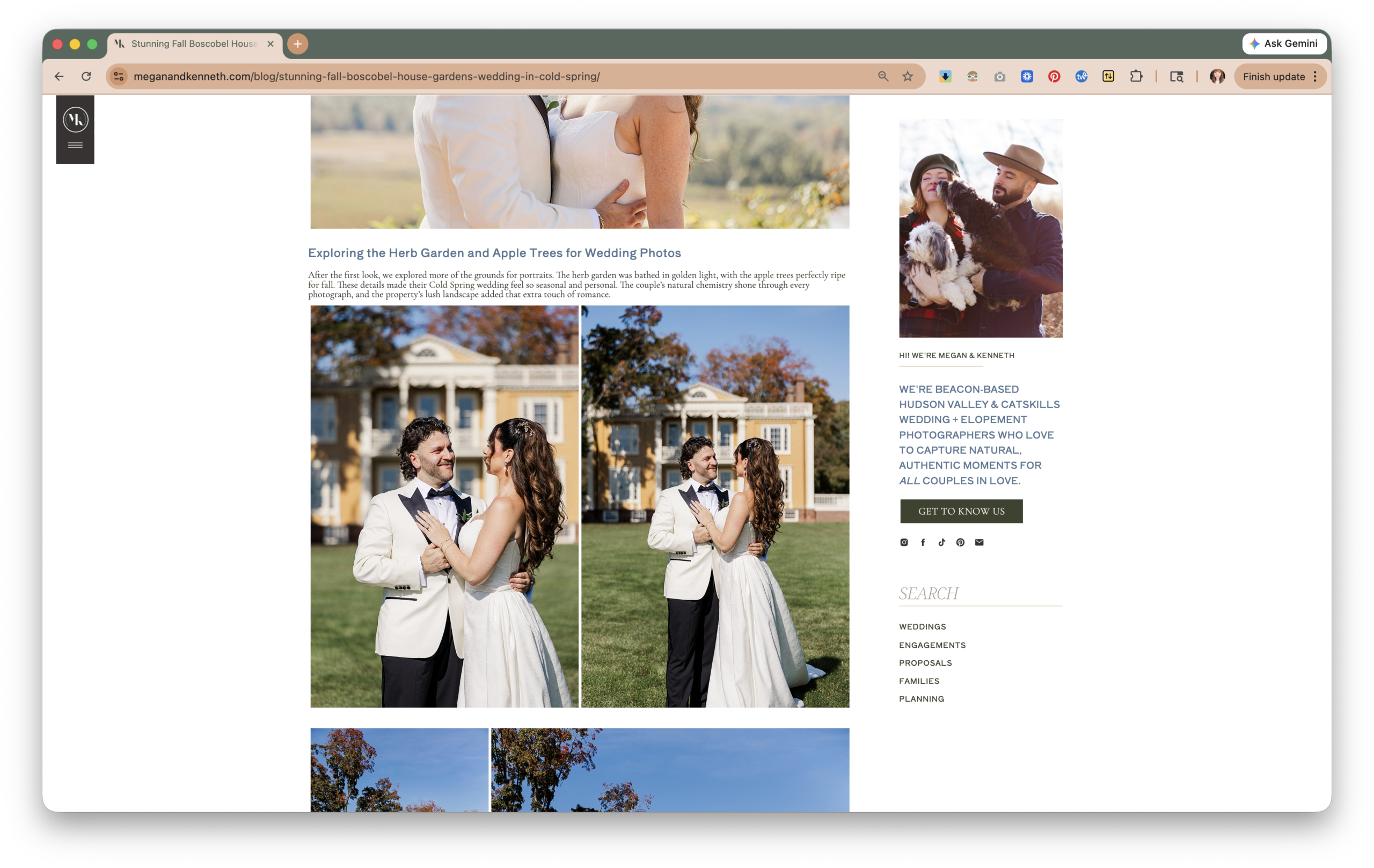
Screenshot from a blog post on Megan & Kenneth’s website
Include Venue Details That Future Couples Are Searching For
One of the best things you can do for both your readers and your search rankings is include real details about the venue. Write a paragraph or two about what the venue is like, what makes it special, how it photographs, and what couples should know if they are considering it.
Future couples who are researching that venue will find your post, read it, and trust you immediately. You have clearly been there. You know the light in the barn in the afternoon. You know the best spot for portraits. You are not just another photographer who showed up once. You are the expert.
This kind of content also signals to Google that your post is genuinely useful and relevant to searches about that venue, which helps you rank higher over time.
Use Headers with the Venue Name
Break your post up using headers, and include the venue name in at least one or two of them. Something like “Why Stonover Farm Is a Dream to Photograph” or “The Details: An Autumn Ceremony at Stonover Farm.” These headers reinforce your keyword and make your post easier to skim, which keeps people on the page longer.
Write at Least 500 to 800 Words
This does not need to be an essay, but it does need to be substantial enough for Google to take it seriously. A post with three sentences and 40 photos is not going to rank. Aim for at least 500 words of actual written content. If you are doing this well and including venue details, the couple’s story, and what made the day special, hitting 700 or 800 words is usually pretty easy.
Name the Vendors
Always include a vendor list at the end of your post. List the venue, the florist, the caterer, the DJ, the dress boutique, and anyone else involved in the day. Include links to their websites where you can.
This creates internal connections between your content and other well-established businesses, which is good for SEO. It also means those vendors might link back to your post when they share it, which sends traffic your way and tells Google your content is worth pointing to.
How to Optimize the Technical Side
The content of your post matters a lot, but so does the technical setup underneath it.
Write a Custom Meta Title and Description
Every blog post should have a unique meta title (the blue link text people see in search results) and meta description (the short summary underneath it). Your meta title should include the venue name and stay under 60 characters. Your meta description should be under 160 characters and give someone a real reason to click.
Most website platforms and SEO plugins let you set these directly. If you are on Showit, you can customize your SEO settings for every blog post because Showit integrates with WordPress, giving you full control over your metadata without any coding. That combination of beautiful design and solid SEO infrastructure is exactly what makes it such a strong platform for photographers who are serious about being found online.
Name Your Images with Keywords
Before you upload photos to your blog post, rename the files. Instead of IMG_4821.jpg, try something like stonover-farm-wedding-ceremony.jpg or berkshires-wedding-photographer-portraits.jpg. Google cannot see your photos, but it can read your file names and alt text, so use them.
Choose a Consistent URL Structure
Your blog post URL should be clean and include the venue name. Something like yoursite.com/blog/stonover-farm-wedding is much better than yoursite.com/blog/post-4391.
How to Actually Keep Up with Blogging Every Wedding
Here is where most photographers get stuck. They know they should be blogging. They have great content from every wedding. But editing takes forever, and by the time the gallery is delivered, the last thing they want to do is sit down and write a post.
The key is making your editing workflow faster so blogging does not feel like an afterthought.
AI editing tools have completely changed the game for this. ImagenAI learns your specific editing style and applies it to your photos automatically, giving you 1,500 free edits to start. Aftershoot does a similar thing and offers 10% off with that link. When culling and editing take a fraction of the time they used to, you have the bandwidth to actually write the blog posts that are going to rank for your venue keywords.
Streamlining your gallery delivery process helps too. If you want your entire workflow to run more smoothly from inquiry to delivery, Sprout Studio brings your CRM, galleries, invoices, and scheduling all into one place. When your business is organized, blogging starts to feel like a natural part of your process rather than one more thing on the to-do list.
How Often Should You Be Blogging?
Ideally, every wedding you shoot gets its own blog post. That might sound like a lot, but remember that each post is a long-term asset. One blog post can bring in inquiries for years after you publish it. Photographed 25 weddings this year? That is 25 opportunities to rank for 25 different venue keywords.
If you are behind and want to catch up, start with the venues you want to shoot at most. Target the venues that get the most searches, the ones where your dream clients are booking. Write those posts first, publish them, and build from there.
Consistency matters more than volume. One blog post per week is better than ten in January and none for the rest of the year.
The Long-Term Payoff
Real wedding blog posts take a little time upfront, but they compound. Each post you publish is another page Google can index. Each venue you cover is another keyword you can rank for. Over time, your blog becomes a library of searchable content that works for you around the clock.
This is not a shortcut. It is a strategy, and it is one that consistently works for photographers who commit to it.
Start with your next wedding. Write the post. Use the venue name. Add the details. Publish it. Then do it again.
Let’s Work Together
If this resonated with you, we might just be a great fit. I work with creative businesses to help them get noticed online through web design, SEO, copywriting, social media, and more. Whether you know exactly what you need or you are still figuring it out, I would love to have a conversation. Head to my contact page and let’s start there.
Disclosure: Some links in this post are affiliate links. I only recommend tools and platforms I truly believe in.

